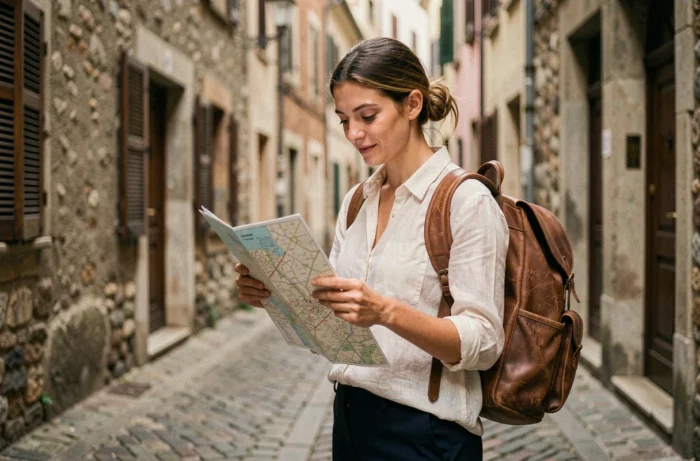
Traveling at your own pace means accepting that you won’t see everything in order to better feel what you’re experiencing. This practical guide for exploring the world without the constraints of speed is based on a simple observation: packed itineraries do not necessarily create lasting memories. Slowing down changes the very nature of travel, not just its comfort.
Slow travel and land mobility: what really changes in an itinerary
Long-term travelers increasingly favor extended stays in one place, with fewer transfers between stops. This trend, described by The Travel Standard and Avalw in their analyses of travel practices in 2025, reflects a shift in expectations: fewer countries checked off, more time spent understanding a neighborhood, a market, a local dialect.
Trains are part of this movement. A report published by Sonerezh in September 2026 describes a significant increase in train travel between 2024 and 2025, driven as much by comfort and flexibility as by a rejection of airport constraints. Walking and cycling are also gaining traction in slow itineraries.
Specifically, replacing a domestic flight with a train journey changes the entire day. No security lines, no transfers to a remote airport. The landscape unfolds, and intermediate stops become options. A train journey from Belgrade to Bar, for example, passes through gorges that you would never see from a window seat. Resources like the Serbia Unpacked website document this type of route through the Balkans, where the rail network remains accessible and inexpensive.
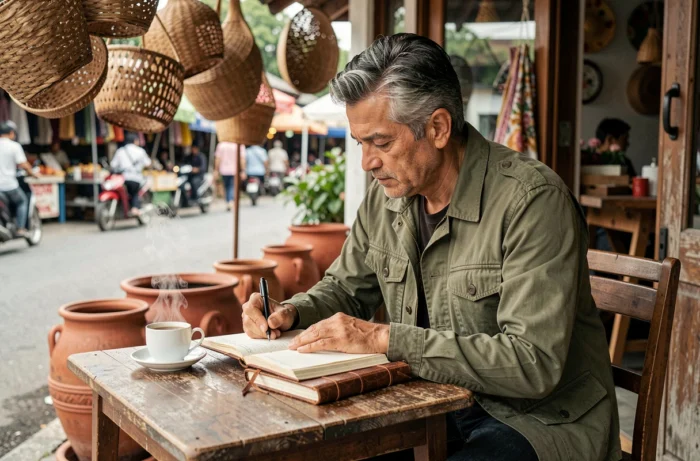
Secondary destinations: why avoiding saturated cities changes the travel experience
Have you ever visited a place that everyone talks about, only to realize on-site that the crowd prevented you from enjoying it? This gap between image and reality is pushing more and more travelers towards lesser-known cities, which are often more welcoming.
This is not a niche whim. It is a practical response to a concrete problem: highly frequented sites impose long lines, inflated prices, and standardized interactions.
What secondary cities offer in return
- Cheaper accommodations, often run by local residents, facilitating direct exchanges about local life
- Visiting rhythms without time constraints: no time slots booked three weeks in advance to enter a museum
- Local cuisine that is less tailored to tourist palates, thus more representative of what locals actually eat
Choosing Plovdiv over Sofia, Ghent over Bruges, or Nara over Kyoto does not mean sacrificing quality. Secondary cities often concentrate comparable heritage with a fraction of the visitors.
Building a flexible itinerary without falling into total improvisation
A slow trip does not mean a trip without structure. The difference from a classic tour lies in the leeway allowed at each stage. Setting the broad outlines (regions crossed, seasons, entry and exit points) while keeping the details open works better than a day-by-day schedule or a complete lack of plan.
The parameters to establish before leaving
Three decisions structure a long-term itinerary more than any others.
The first concerns the actual available duration, not the dreamed duration. A six-month sabbatical and an eight-week summer are not planned in the same way. Underestimating rest time (days without visits, laundry, administrative formalities) compresses the stages and reproduces exactly the stress one sought to escape.
The second concerns the climate. Traveling at your own pace sometimes means staying somewhere longer than expected. If this flexibility falls during the monsoon or in the middle of a continental winter, the experience can quickly deteriorate. Aligning seasons with the regions crossed remains the basis of a viable itinerary.
The third concerns visas. Schengen visa rules, for example, limit stays to 90 days within a 180-day period for nationals of many countries. In 2025, Schengen area consulates received nearly 12 million short-stay visa applications, and the European Commission studied a revision of the Visa Code. Checking entry conditions before finalizing an itinerary avoids costly detours.
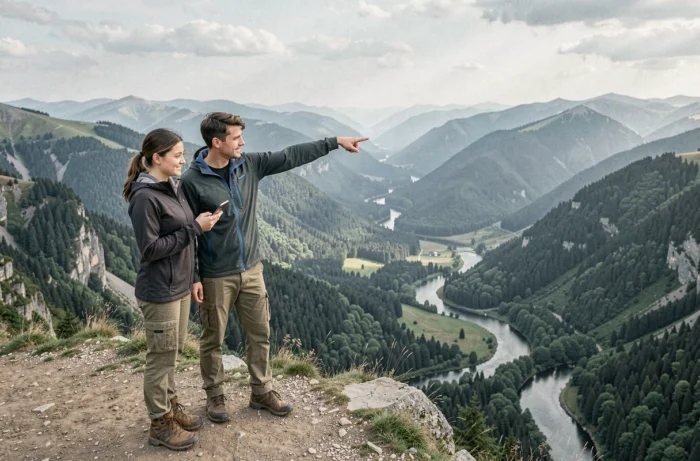
Long-term travel budget: how the slow pace changes expenses
Does slowing down cost more or less? The answer depends almost entirely on accommodation. A traveler who stays three weeks in a rented apartment often pays less per night than a traveler who hops between three hotels in three different cities over the same period.
Expenses that decrease
Transportation is the area where savings are most noticeable. Fewer domestic flights, fewer taxis to airports, fewer lost bags or missed connections. Train and long-distance bus travel is almost always cheaper than flying, especially in Southeast Asia, the Balkans, and South America.
Food follows the same logic. Cooking in a well-equipped accommodation two or three times a week reduces dining expenses without sacrificing culinary discovery. Local markets become places to visit as well as sources of supply.
Expenses that increase
The total duration of the trip remains the determining factor. A six-month trip costs more than a three-week trip, even with a lower daily budget. Long-term travel insurance, foreign banking fees, and potential storage of your belongings in your home country add up.
- International health insurance for several months far exceeds the cost of a standard two-week vacation coverage
- Exchange and withdrawal fees vary widely from country to country and can represent a significant expense over time
- Renewing certain equipment (shoes, bags, worn clothing) becomes necessary after a few months of travel
Safety and health in slow travel: the precautions that really matter
An extended stay in a country exposes you to different risks than a quick stop. Health problems related to food or water often appear after several weeks, when initial vigilance wanes.
Bringing a first aid kit suited to the local context (antimalarials if necessary, anti-diarrheal treatment, sun protection appropriate to the latitude) is common sense, but many long-term travelers leave with a kit designed for a weekend.
Keeping digital copies of all identity and insurance documents in an accessible offline space simplifies any process in case of loss or theft. An encrypted folder on the phone and a copy in a cloud service are sufficient.
Personal safety in slow travel also depends on knowing a neighborhood. Staying several days in the same place allows you to identify quiet areas, times to avoid, and reliable shops. This is a concrete advantage of a slow pace over a quick visit.
Exploring the world at your own pace does not require an unlimited budget or a sabbatical year. It mainly requires accepting that the number of countries visited is not a relevant metric. A month in two well-chosen regions leaves deep memories, whereas a whirlwind tour of ten capitals in six weeks often leaves only a diffuse fatigue.