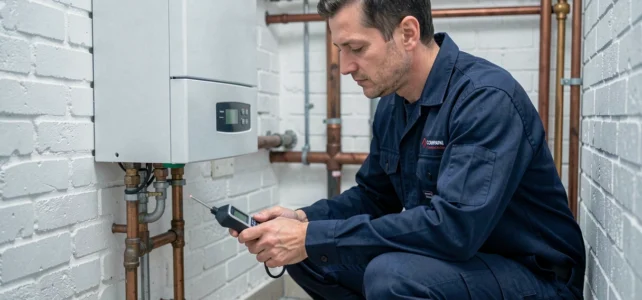
A boiler that breaks down doesn’t always give a readable error code. Sometimes, it’s a gradual drop in pressure, an unusual noise in the system, or hot water that takes several minutes to arrive. Boiler repair in Brussels relies on a precise technical diagnosis, carried out by a certified heating technician capable of identifying the real cause of the malfunction before any intervention on the equipment.
Preparing for the technician’s intervention: what speeds up the diagnosis
Even before the technician arrives, a few concrete actions can reduce the diagnostic time and limit costs. Photographing the boiler’s nameplate allows the technician to identify the exact model and anticipate compatible parts.
See also : Real Estate Purchase: How to Compare Buying in Andorra and France?
Recording the error code displayed on the control panel, noting the pressure indicated on the manometer, and gathering the maintenance history are reflexes that avoid unnecessary trips. A well-prepared diagnosis reduces visits and premature replacements.
This preparation has a direct effect on the bill. A technician who arrives with the right information can often resolve the issue in a single visit, whereas a technician without data wastes time identifying the model, searching for part references, or retesting things that the owner could have already done. Choosing boiler repair in Brussels with these elements in hand changes the dynamics of the intervention.
Read also : How to Unclog a Stuck KitchenAid Bowl: Causes and Effective Solutions to Know

Emergency signs on a gas or oil boiler: when to call immediately
Not all malfunctions warrant an emergency call. Distinguishing between a minor breakdown and a dangerous situation avoids both the extra cost of a nighttime intervention and the risk of a serious incident.
Signals that require an immediate call
- Gas smell in the technical room or adjacent rooms: turn off the gas supply, ventilate, and leave the premises before contacting a technician or the gas emergency number
- Black or yellowish marks around the burner, indicating incomplete combustion and a potential risk of carbon monoxide emission
- Visible water leak under the boiler, especially if it comes from the heat exchanger or expansion tank, as it can lead to a short circuit on electronic components
- Boiler that repeatedly goes into safety mode after each attempt at manual reset
Breakdowns that can wait a few hours
A slow drop in pressure in the heating circuit, a radiator that doesn’t heat in one room, or a slight noise of water circulation generally do not constitute an emergency. Checking the pressure on the manometer and bleeding the radiators are actions that can be done without a technician.
The line between emergency and common breakdown lies in safety: as soon as there is a doubt about a gas leak, an abnormal smell, or a combustion defect, the certified professional is the only relevant contact.
PEB obligation in Brussels: repair is not the only reason to call a technician
In the Brussels-Capital Region, the maintenance and inspection of boilers fall under a regulatory obligation related to the energy performance of buildings (PEB). The frequency of inspections varies depending on the fuel used, and the intervention must be carried out by a technician certified by Brussels Environment.
This regulatory framework changes the logic of calling in a professional. One does not contact a technician only when the boiler breaks down: the PEB certificate is required by insurance or the property manager, and its absence can pose problems in the event of a disaster.
Owner or tenant: who calls the technician
Routine maintenance (cleaning the burner, checking combustion, replacing small wear parts) is generally the tenant’s responsibility. Major repairs (replacement of the heat exchanger, the heat generator, or the circulator) fall under the owner’s responsibility.
This division often leads to blockages. The tenant notices the breakdown but hesitates to incur costs without the owner’s agreement. The owner does not see the boiler daily and underestimates the urgency. Clarifying this division before the breakdown, ideally in the lease, avoids delays in intervention that worsen the problem.
Gas, oil, or condensing boiler: the type of device changes the repair
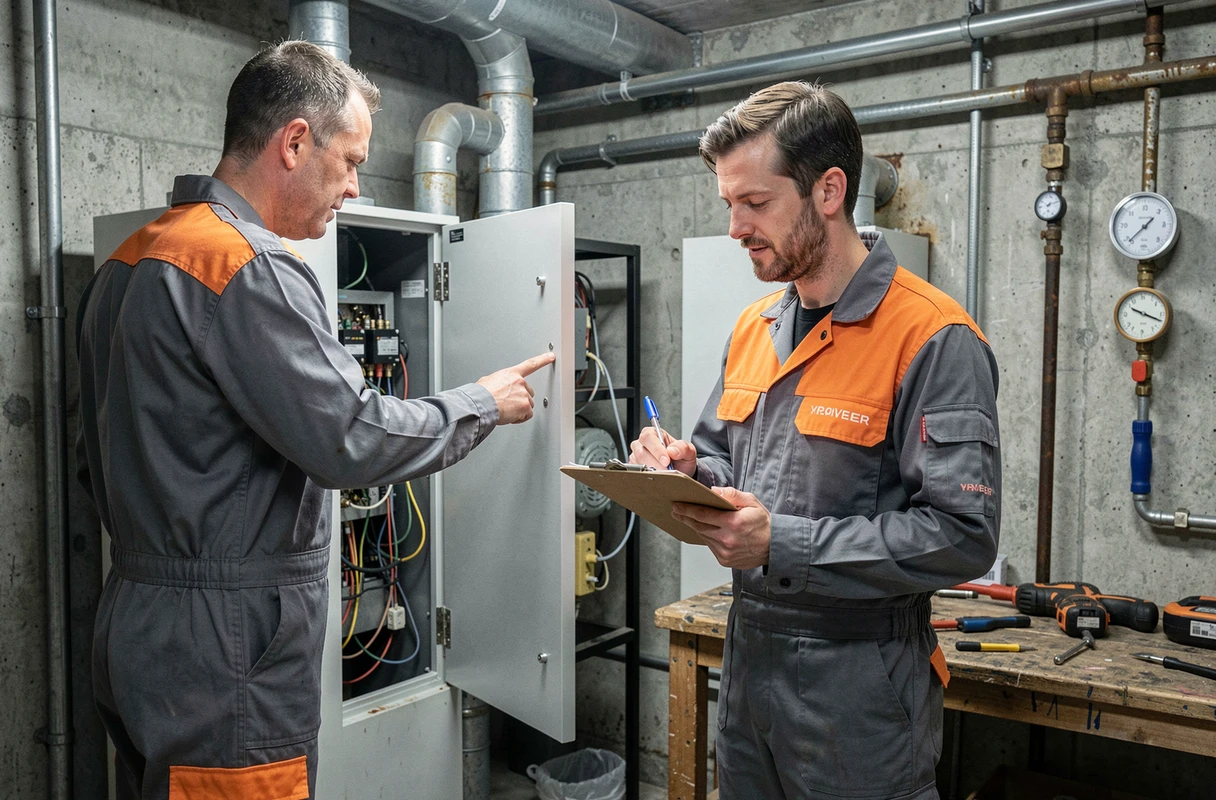
Heating technicians are not all trained on the same technologies. A condensing boiler, which is more energy-efficient, is also more sensitive to adjustment issues and water quality.
On a conventional gas boiler, frequent breakdowns involve the burner, thermocouple, or electronic board. On an oil boiler, the fuel filter and nozzle are the first elements to check. A condensing boiler adds a condensate trap and a secondary heat exchanger that require regular cleaning to avoid blockage.
- Gas boiler: ensure that the technician is familiar with the installed brand (Vaillant, Bulex, Viessmann, Junkers, Buderus, among others)
- Oil boiler: ensure that the technician has the specific diagnostic tools for the oil burner
- Condensing boiler: ask if the intervention includes checking the trap, the condensate drainage, and the combustion analysis test
Specifying the type of boiler and the brand at the first phone contact allows the technician to come with the appropriate parts. This reduces the risk of a second billed visit.
Boiler repair in Brussels is not limited to emergency repairs. Between the PEB obligation, the preparation of the diagnosis, and the choice of a technician suited to the type of device, each step before the breakdown reduces costs and delays. Keeping the maintenance certificate up to date and knowing the first control actions remains the best protection against unpleasant surprises in the middle of winter.