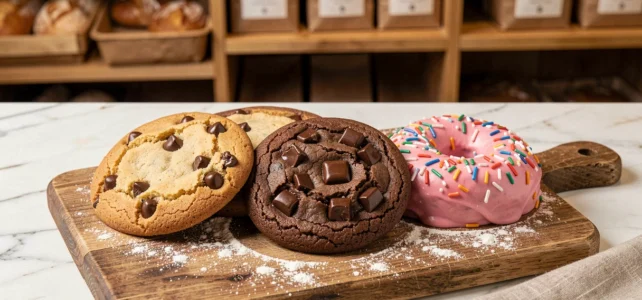
Crumbl Cookie is an American chain of giant cookies, stuffed and topped with frosting, that has gone viral on TikTok. No Crumbl store exists in France, and no concrete signals confirm a launch in 2026. The model relies on franchising: without a local partner identified, the French market remains “available” but untapped. Finding this indulgent experience therefore involves other channels, more varied than one might think.
The XXL cookie, undercooked in the center and generous in filling, corresponds to what the market calls the New York style cookie. It is this specific format that several French players replicate, each with their own approach to texture, sourcing, and distribution.
Recommended read : Review of Les Trois Pointes in Bonifacio: a wild beach to discover absolutely
New York Style Cookies in France: One Format, Several Schools
The term “New York style cookie” refers to a thick cookie, slightly crispy on the surface and gooey in the center, with a diameter that far exceeds that of a classic bakery cookie. In France, this format has moved beyond curiosity to become a structured offering.
Delambre Bakery, located in Lille and Paris, explicitly claims this American lineage. The shop produces thick cookies, with a deliberately undercooked center. In Côtes-d’Armor, J’M Cookies offers a similar selection from an artisanal workshop, with online sales and delivery.
Read also : Real Estate Purchase: How to Compare Buying in Andorra and France?
These two brands illustrate a broader movement: cookie-centric specialty shops are filling the void left by Crumbl by adapting the format to French tastes, often with less sugar and local raw materials. To explore alternatives to Crumbl Cookie in France, several options exist beyond these two addresses.
French Bakeries and Premium Cookies: A Discreet but Solid Offering
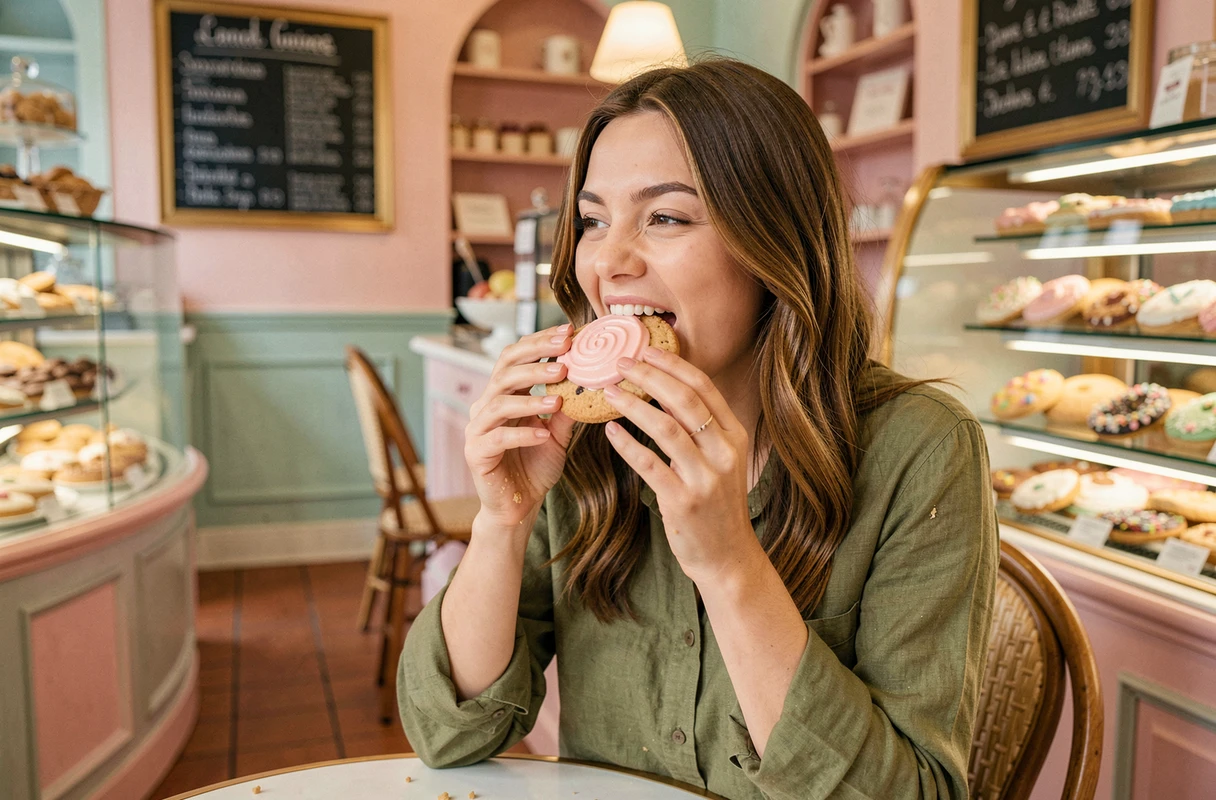
The most accessible alternative does not come from specialty shops, but from bakery-pastry chains that are expanding their range. Ange, Feuillette, Marie Blachère, and the Banette workshops are incorporating cookies into their sweet snacking offerings.
The positioning differs from the XXL American cookie. These brands offer more modest sizes, but with a major logistical advantage: a territorial network that independent shops cannot cover. While Crumbl relies on scarcity and waiting lines, French bakeries focus on daily proximity.
Mokonuts in Paris (11th arrondissement) represents another case. This café-restaurant, run by Japanese pastry chef Moko Hirayama and Lebanese chef Omar Koreitem, serves cookies with unusual combinations: white chocolate and black olives, coffee-coconut, sesame. The texture remains in the spirit of the American cookie (crispy on the edges, gooey in the center), but the flavors diverge radically from the Crumbl range.
Vegan Cookies: An Alternative That Crumbl Does Not Offer
The plant-based segment is a blind spot for Crumbl, whose menu relies heavily on butter, cream, and eggs. In France, several Parisian establishments have filled this gap.
Land & Monkeys, a 100% plant-based bakery, offers cookies whose texture approaches the classic result thanks to well-crafted substitutes (nut purees, applesauce, vegetable oils). Boneshaker, another Parisian address with a plant-based focus, includes cookies in a selection of revisited Anglo-Saxon pastries and baked goods.
The French vegan cookie is no longer a compromise but a standalone offering, with textures and flavors that do not seek to imitate butter but to create their own taste profile.
What Distinguishes a Good Plant-Based Cookie
- The type of vegetable fat used (coconut oil, cocoa butter, almond puree) determines the baking stability and surface crunch
- The binding agent (flax seeds, applesauce, aquafaba) affects the softness of the center and the cohesion of the dough
- The sugar content is often reduced compared to American recipes, compensated by more aromatic inclusions (praline, citrus zest, fleur de sel)
Supermarket Cookies: Crumbl “Dupes” at a Reduced Price
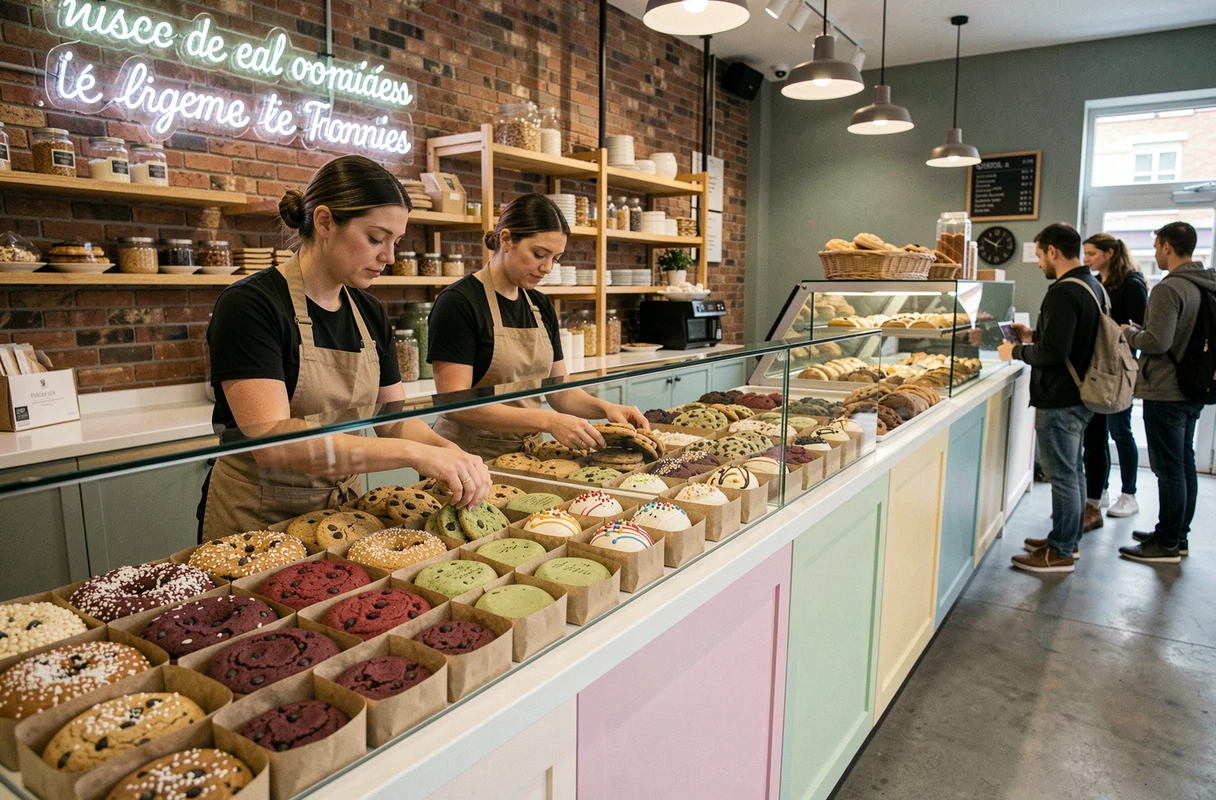
A recent phenomenon is affecting the French supermarket sector: the appearance of large-format cookies inspired by the Crumbl style in the bakery and snacking aisles. These products replicate the thick format, visible toppings, and well-designed packaging that characterize the American brand.
The price positioning remains their main selling point. Where an artisanal cookie costs several euros each, supermarket versions are significantly lower. The trade-off lies in the ingredients: preservatives, artificial flavors, and palm oil often replace fresh butter and natural vanilla.
Criteria for Evaluating a Supermarket Cookie
- The ingredient list: a good indicator is the presence of butter in the first or second position, before vegetable oils
- The texture after reheating: a cookie of acceptable quality regains softness after a few seconds in the microwave, while a low-quality product hardens or becomes rubbery
- The filling/dough ratio: a cookie that displays chocolate chunks on the surface but contains few inside prioritizes appearance over taste
These dupes will not replace an artisanal cookie, but they democratize the XXL format for an audience that does not frequent specialty shops.
Reproducing a Crumbl Style Cookie at Home: Technical Variables
The recipe for a thick and undercooked cookie relies on a few precise parameters. The temperature of the butter is the first lever: room temperature butter (not melted) produces a thicker cookie, as the dough spreads less during baking. Cold butter cut into pieces, a technique borrowed from shortcrust pastry, further enhances thickness.
The chilling time makes a difference. Allowing the dough to rest in the refrigerator for several hours enables the flours to absorb moisture and the butter to resolidify. The cookie retains its shape in the oven instead of flattening.
Baking stops when the center still appears raw. This is the undercooked cookie technique: residual heat finishes the cooking outside the oven. Taking the cookie out too early results in a liquid center, too late results in a dry biscuit. The useful window is a matter of one to two minutes.
The French cookie market has compensated for the absence of Crumbl through multiple avenues: specialty shops, local bakeries, vegan offerings, and even supermarkets. Each channel serves a different purpose, from daily snacks to occasional indulgent experiences. The diversity of French approaches ultimately offers a broader range than a single standardized brand.