Custom travel is no longer reserved for premium budgets or historic agencies. In recent years, the way travelers design their adventure itineraries has profoundly changed, driven by new digital tools and a growing expectation for personalization. The market is segmenting, intermediaries are multiplying, and the boundary between self-planning and professional assistance is becoming blurred.
Co-designed adventure itineraries with AI: what it really changes
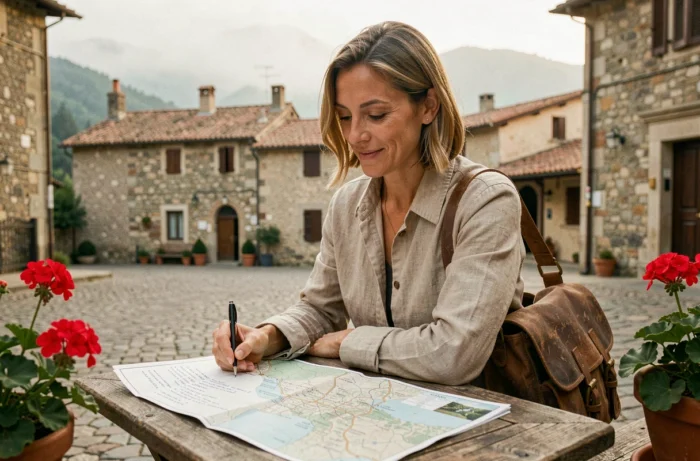
Since 2024, platforms like Google Gemini, Kayak, or Trip.com offer features for dynamic itineraries adjusted in real-time according to the traveler’s preferences, budget, and constraints. The idea is no longer to choose a tour from a catalog, but to generate a day-by-day itinerary base even before contacting an advisor.
This change transforms the inspiration phase. Travelers now arrive at a specialist with a pre-built program created by a conversational assistant, which they use as a starting point for the discussion. The human advisor no longer intervenes at the idea stage but afterwards, to adjust, verify logistical feasibility, and secure bookings.
Field feedback varies on the reliability of these tools. Some travelers report coherent and actionable suggestions. Others describe AI-generated trips that turn into logistical nightmares, with non-existent accommodations or underestimated travel times. AI generates ideas, not operational guarantees.
Players like La Maison du Voyageur position their offer precisely in this niche: leveraging the wealth of automated suggestions while providing the human verification that the algorithm cannot offer.
Custom travel for families or solo: the criteria that really matter
Most competing sites list destinations by continent or activity. This catalog approach masks a recurring problem: a good itinerary depends less on the destination than on the traveler’s profile.
Traveling with young children imposes constraints that the simple mention of “family travel” does not cover. The available data does not allow for concluding that a destination is universally suitable for all ages. Three criteria deserve special attention before customizing a trip:
- Altitude and physical conditions of the route, which limit options for children under eight or untrained travelers. A trek above 3,000 meters is not a “nature trip” like any other.
- The density of the daily program. An overloaded custom itinerary (three visits, one transfer, and one activity per day) tires travelers out faster than a classic organized tour because no one manages the logistics for you.
- Access to healthcare and insurance coverage in remote areas. Adventure trips off the beaten path often imply long evacuations in case of medical issues, a factor rarely highlighted in descriptions.
A solo traveler, on the other hand, can handle more unpredictability. Customization then focuses more on the pace and local encounters than on logistical security.
Custom destinations: beyond the classics Iceland-Costa Rica-Japan
The most requested custom tours converge towards a handful of countries. This concentration creates a paradox: the “unique” trip ends up resembling that of thousands of other travelers on the same routes, at the same times.
Secondary destinations often offer a better balance between personalization and real experience. A country less covered by generalist agencies forces the advisor to build a truly custom itinerary, without a pre-existing model to recycle.
Field feedback varies on this point. Some travelers prefer the security of a well-documented destination, where accommodations and activities are tested by thousands of visitors. Others specifically seek the absence of marking.
Landscapes and nature experiences off the saturated circuits
Inland Southeast Asia (beyond the Thai coasts), West Africa, or certain regions of South America still little covered by tour operators allow for the construction of stays where discovery takes precedence over standardized comfort. The trade-off: fewer tourist infrastructures, longer transfers, and more demanding preparation.
Choosing a custom destination for adventure is not just about pointing to a country on a map. It involves evaluating the season, access conditions, health risk levels, and the quality of the local guide network.

Budget for a custom trip: what really affects the price
The price of a personalized trip depends on variables that online quotes do not always detail. The most underestimated item remains internal transport, particularly domestic flights, private transfers, and boat connections in island regions.
Three factors weigh more heavily than the choice of hotel:
- The seasonality of the destination. The cost of the same itinerary can double between low and high season, mainly due to flights and not accommodation.
- The level of assistance. A private French-speaking guide for the entire stay represents a significant additional cost compared to occasional local guides.
- Activities requiring advance booking. Some experiences (regulated trekking permits, safaris in quota reserves, diving at protected sites) require reservations several months in advance, with high cancellation fees.
Comparing two custom travel quotes without detailing these items is like comparing two prices without reading the labels. Transparency regarding budget breakdown remains the primary indicator of a provider’s seriousness.
Custom travel is becoming more accessible thanks to digital tools, but the quality of the experience still relies on the precision of the preparation. A well-constructed itinerary is not measured by the number of countries crossed or the rarity of the destination, but by the alignment between the program, the traveler’s profile, and the realities on the ground.