
A PHEV driver who mainly drives in the city, charges every evening at home, and keeps their battery between 20 and 80% charge does not stress the battery pack in the same way as another driver who constantly uses highways without ever plugging in. The lifespan of a plug-in hybrid battery depends less on a theoretical mileage count than on how it is used on a daily basis.
Common content announces a range of 8 to 15 years. This figure exists, but it masks considerable variations depending on battery chemistry, climate, charging profile, and the onboard thermal management system. We will detail the parameters that really matter in practice.
See also : How to Withdraw Your Child from School: Steps, Consequences, and Practical Tips
PHEV Battery Thermal Management: The Underestimated Factor
Temperature is the primary enemy of a lithium-ion pack. In a plug-in hybrid vehicle, the battery is smaller than in a 100% electric vehicle, but it undergoes more frequent charge and discharge cycles relative to its capacity. The cooling system (active or passive) plays a crucial role.
A PHEV equipped with active liquid cooling keeps the cells within an optimal temperature range, even in high heat. Models with simple air cooling allow the temperature to rise more quickly in summer or during repeated fast charges, which accelerates the chemical degradation of the cells.
Related reading : How to Choose a Short Wedding Dress for a Chic and Trendy Look
According to L’argus, heatwave periods can significantly reduce the range of electrified vehicles. For PHEVs, this effect accumulates with short urban trips where the battery is constantly engaged. Parking in the shade, avoiding charging immediately after a long trip in hot weather: these simple habits make a real difference in medium-term residual capacity.
When questioning the lifespan of a plug-in hybrid battery, thermal management should be at the top of the list, even before charging habits.
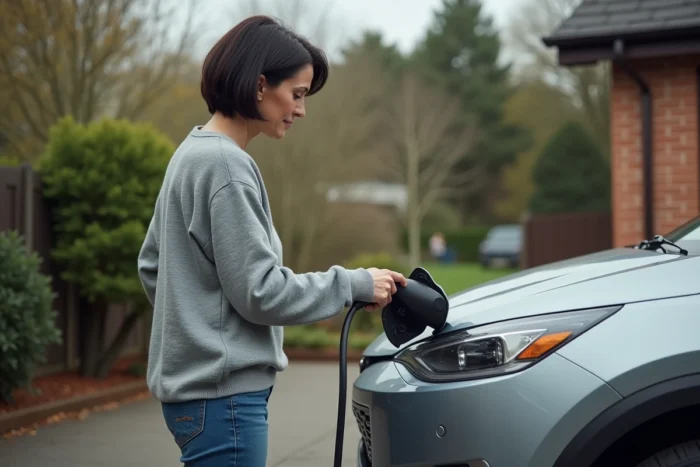
Charge Cycles and Usage Range: What Really Wears Out the Cells
A lithium-ion battery does not wear out linearly. What accelerates capacity loss is the combination of two factors: the depth of discharge and the frequency of full cycles.
Keeping the charge between 20 and 80% reduces electrochemical stress on the cells. Manufacturers program the BMS (Battery Management System) to limit access to the extremes of the battery, but the driver still has some leeway.
- Consistently charging to 100% and driving until the pack is empty multiplies deep cycles, which are the most destructive for lithium-ion chemistry
- Favoring slow charging (home outlet or wallbox) over repeated fast charging limits the internal heating of the cells
- Avoiding leaving the vehicle parked for several weeks with a very low battery (below 10%) or very high (above 90%) preserves the resting voltage of the cells
In a PHEV, there is also the temptation to never plug in. Some drivers operate exclusively in thermal mode, allowing the battery to hover around a low level. The BMS manages this situation, but a PHEV battery that is never charged gradually loses capacity due to the lack of regular and complete recalibration cycles.
Manufacturer Warranties on PHEV Batteries: Revealing Discrepancies
Battery warranties vary from one manufacturer to another, and these discrepancies are not trivial. They reflect the manufacturer’s confidence in the chemistry and the onboard management system.
Most European and Japanese manufacturers offer a warranty of 8 to 10 years or a capped mileage (often around 160,000 km). BYD, with its Blade Battery technology, offers a warranty that can reach several hundred thousand kilometers depending on the market. Even more notably, the Chinese manufacturer Chery now offers a lifetime warranty on batteries, electric motors, and control units of its plug-in hybrid vehicles equipped with the Rhino battery.
This evolution reflects a paradigm shift. Some manufacturers believe that the useful life of the PHEV battery exceeds the normal lifecycle of the vehicle. For buyers, comparing warranties remains a reliable indicator of the actual robustness of the pack.
What the Warranty Does Not Always Cover
The warranty generally covers a residual capacity threshold (often 70% of the original capacity). Falling below this threshold before the warranty expires entitles the owner to a replacement. However, a 20% loss over five years, if it remains above the threshold, does not trigger anything.
Feedback varies on this point: some owners notice a perceptible degradation as early as the third year on models with passive cooling, while others retain more than 90% capacity after eight years on vehicles better equipped thermally.
Lithium-Ion Chemistry vs. NiMH: Concrete Impact on Longevity
Plug-in hybrids almost exclusively use lithium-ion batteries, unlike some conventional hybrids (HEVs) still equipped with nickel-metal hydride (NiMH) batteries. This distinction has direct consequences.
Lithium-ion offers a higher energy density, allowing for more energy to be stored in a reduced volume. This is essential for PHEVs, which need sufficient electric range to cover daily trips.
In return, lithium-ion is more sensitive to extreme temperatures and fast charging than NiMH. LFP (lithium iron phosphate) technology, used notably by BYD, improves thermal tolerance and the number of cycles supported, at the cost of slightly lower energy density.
For a used PHEV buyer, knowing the exact chemistry of the battery (NMC, NCA, LFP) allows for a more accurate estimation of the expected residual capacity based on the age and mileage of the vehicle.
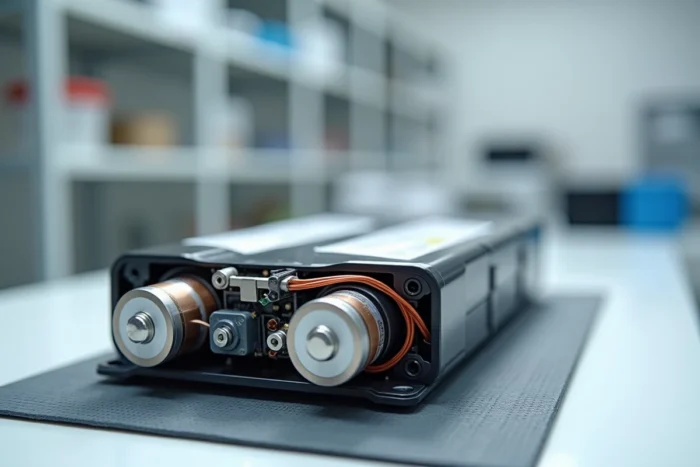
PHEV Battery Diagnosis Before Buying Used
In the used market, the condition of the battery determines the actual value of the plug-in hybrid vehicle. A specific diagnosis, performed with a compatible tool (like an OBD reader with dedicated software), provides access to the SOH (State of Health), expressed as a percentage of the original capacity.
- An SOH above 85% after five years indicates a battery in good condition, consistent with careful usage
- An SOH between 70 and 85% signals normal but advanced degradation, to be considered in price negotiation
- An SOH below 70% on a recent vehicle suggests a problem (thermal exposure, lack of regular charging, BMS defect)
This diagnosis costs little compared to the price of a battery replacement, which can amount to several thousand euros depending on the model. Before any transaction, requesting the SOH reading or demanding an independent check remains the most cost-effective precaution to assess the remaining lifespan of the pack.