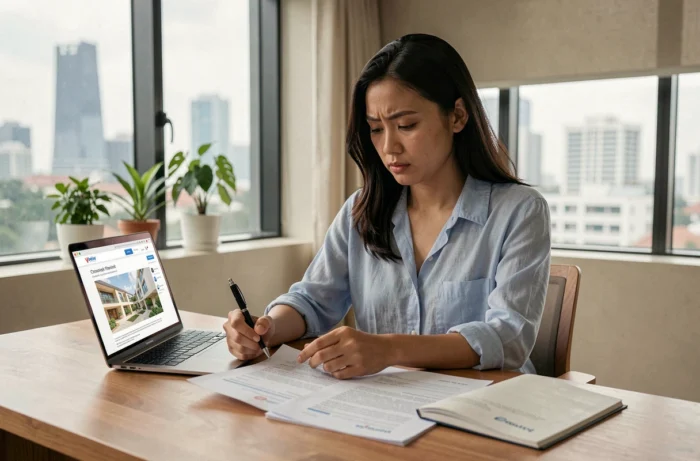
We arrive in Bangkok with a housing budget in mind, a shortlist of condos spotted online, and the desire to sign quickly to settle in. This is exactly the tempo that rental scams exploit. Between fake landlords who cash a deposit on a property they do not own and leases written only in Thai with tricky clauses, the traps target both expatriates and passing digital nomads.
Check the landlord’s status before any transfer in Bangkok
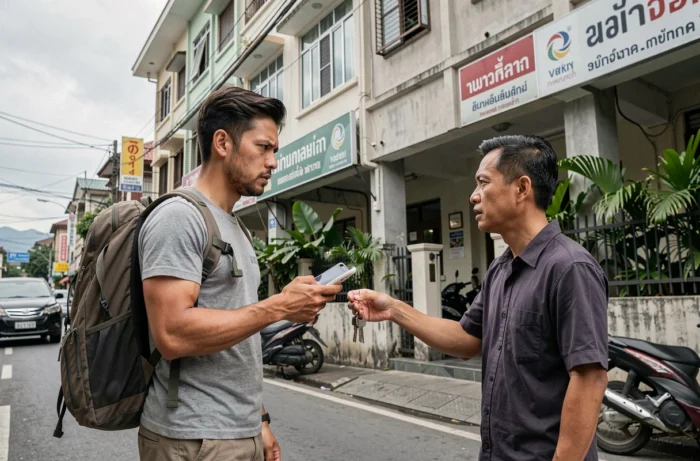
An apartment can be listed on Facebook Marketplace, in a Line group, or on a local platform by someone who has no rights to it. The first concrete action is to request a copy of the title deed (the Chanote) and verify that the landlord’s name matches.
The Thai Department of Lands allows this verification at the provincial office. One can also demand a photo of the owner’s ID card. If the person on the other side refuses or hesitates, it’s a clear warning signal.
For condos managed by a juristic person (the property management), calling the building office directly remains the most reliable method. You can confirm in two minutes that the owner is indeed the one presenting themselves and that the unit is available for rent.
When looking to rent in Bangkok with Sur Le Toit, this type of prior verification is part of the process, which avoids dealing with a ghost intermediary.
Security deposit and advance rent: what Thai law regulates since 2025
The Notification of the Contract Committee B.E. 2568 (2025), effective September 4, 2025, has changed the game for tenants. The security deposit combined with the advance rent cannot exceed three months’ rent for monthly or short-term rentals when the landlord falls under the scope of this regulation.
Note that this rule does not automatically cover an individual renting a single condo. The landlord’s status must be identified to know if the cap applies. In practice, this limit is used as a negotiation point, even when facing an owner not subject to the regulation.
Refund of the deposit: the most common trap
Many scams only reveal themselves when leaving the accommodation. The landlord withholds the entire deposit by citing imaginary damages. Since the 2025 regulation, the refund must occur within seven days after the lease ends and the property is returned, in the absence of damages attributable to the tenant.
To protect oneself, two things should be required at the time of signing:
- A detailed inventory with dated photos, signed by both parties, attached to the lease
- A written clause in the contract that mentions the timeframe for the return of the deposit and the conditions for withholding
- The payment of the deposit by bank transfer (never in cash), with a receipt mentioning the amount and purpose
If the landlord refuses a detailed inventory, move on to the next condo.
Bilingual lease and clauses to read line by line
A lease written only in Thai is legal, but it’s a minefield for a foreign tenant. Feedback varies on this point; some landlords accept a bilingual lease without difficulty, while others hesitate. In any case, demanding an English version of the contract protects against abusive clauses.
The points to check first in a lease in Bangkok:
- The notice period for termination (often one month, sometimes two) and penalties for early departure
- The distribution of charges: water, electricity, air conditioning maintenance, common area fees
- The conditions for lease renewal and any clause for automatic rent increase
- The prohibition or permission to sublet, a sensitive point for digital nomads who travel regularly
A well-drafted lease does not prevent all disputes, but it constitutes the only enforceable basis in case of conflict. Having the document reviewed by a local lawyer costs a fraction of the security deposit.
Short-term rental in Bangkok: a legal risk often ignored
Renting a condo by the day or for less than a month in an ordinary residential building can be illegal in Thailand. The Hotel Act B.E. 2547 (2004) requires a hotel license for any paid short-term accommodation. In March 2025, Thai authorities reaffirmed the prohibition of daily condo rentals without a license.
In practice, if you sign for two weeks in a condo without the building having a license, both the tenant and the landlord are exposed to prosecution. The management can also demand immediate eviction.
For a stay of less than a month, it’s better to target a serviced apartment with a hotel license or a real hotel. For a stay of a month or more, a standard monthly lease in a residential condo remains the safest framework.
Too good to be true listings on Facebook groups
Rental scams in Bangkok circulate massively on Facebook groups dedicated to expatriates. The classic scheme: a new condo in a sought-after area (Sukhumvit, Silom), professional photos, a price significantly lower than the market. The fake landlord asks for a quick transfer to “reserve” the property before a visit.
An abnormally low price for the area is the first signal. Always compare with the rates displayed on established local platforms. And do not send anything, strictly nothing, before physically visiting the accommodation and verifying the landlord’s identity.
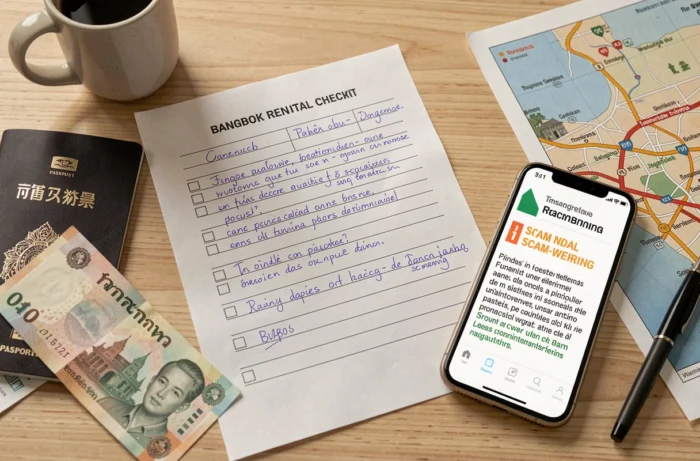
Renting an apartment in Bangkok does not require advanced legal skills, but it does demand method. Verifying the title deed, paying by traceable transfer, demanding a bilingual lease, and a signed inventory: these four reflexes filter out the majority of scams. The rest comes down to a simple rule, never send money before stepping foot in the accommodation.