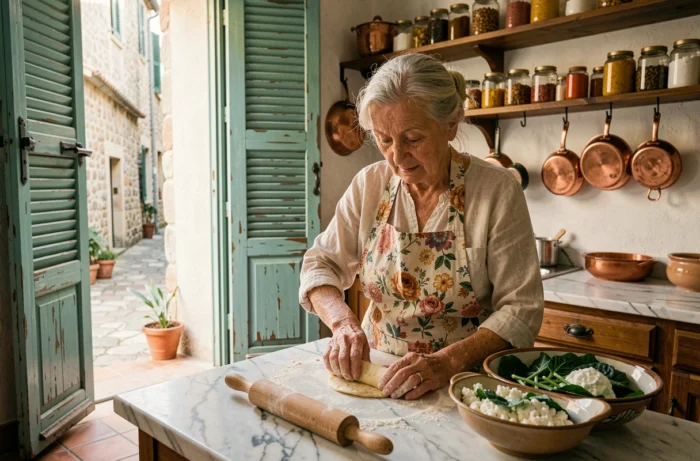
The Monegasque cuisine is not limited to the Michelin-starred tables of Monte-Carlo. Behind the palaces, a discreet culinary repertoire persists, nourished by centuries of exchanges between Provence, Liguria, and the Mediterranean coast. These Monegasque culinary traditions rely on gestures passed down through families, simple products, and recipes that still spark debate among neighbors.
Monegasque Barbagiuàn: a disputed recipe between Monaco and Menton
Have you ever tasted a barbagiuàn? This small fried, stuffed, and golden pastry is the most emblematic dish of the principality. Its uniqueness lies in its filling: the Monegasque version includes pork, while the Menton version favors Swiss chard and rice.
This is not a trivial detail. According to an article from Nice-Matin published in October 2026, Monaco and Menton each claim the authenticity of the barbagiuàn. The two territories defend distinct recipes, inherited from different family traditions. This difference illustrates that the Riviera’s gastronomy does not rest on a single version, but on deeply rooted local variations.
To explore these specialties in more detail, Petit Monégasque lists the products and recipes that keep this heritage alive on a daily basis.
Barbagiuàn is generally eaten as an appetizer or a starter, hot, straight from the fryer. Its thin and crispy dough contrasts with the melting interior. In Monegasque families, each household maintains its own proportion of filling, making the recipe impossible to pin down to an official version.
Monegasque cuisine and heritage: an association to save family recipes
Why formalize recipes that have been passed down orally for generations? Because the last holders of these know-how are aging, and some variants risk disappearing.
In 2023, the association Memory and Transmission of Monegasque Cuisine was created for this specific purpose. It collects family recipes and documents the preparation methods, not just the ingredients. The goal goes beyond mere preservation: it aims to have Monegasque cuisine recognized as an element of the intangible cultural heritage of the principality.
This approach is rare for such a small territory. It reflects a growing awareness: intergenerational culinary transmission is no longer a given. Lifestyles are changing, family meals are becoming rarer, and everyday dishes are giving way to standardized dining.
The association works on local variations. Two Monegasque families may prepare the same dish with notable differences in proportions, cooking times, or choice of herbs. It is these micro-variations that constitute the real richness of this cuisine.
Salty Monegasque specialties: stockfish, fougasse, and seafood
Barbagiuàn is not alone. Monegasque cuisine revolves around several dishes that reflect the dual Provençal and Ligurian influence of the territory.
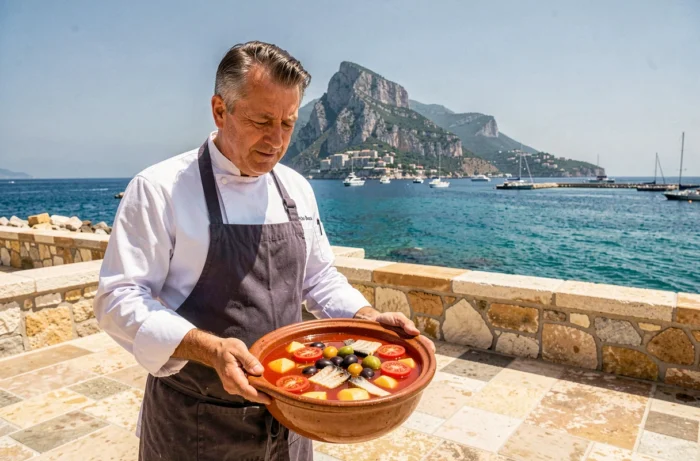
- Stockfish (or stocafi) is dried cod prepared in a stew with onion, garlic, black olives, rosemary, savory, and white wine. This dish reflects the historical importance of dried fish in Mediterranean diets, particularly through exchanges related to the Salt Route.
- The Monegasque fougasse, on the savory side, differs from Provençal versions by its filling. It often includes onions, anchovies, and black olives, in a bread dough flavored with olive oil.
- Seafood occupies a central place. A large portion of traditional Monegasque recipes pays particular attention to local fish, cooked grilled, in soup, or fried.
These dishes share a common point: they use few ingredients but require long preparation. Stockfish needs several days of soaking before cooking. Fougasse requires a precise rising time to achieve the right texture.
The Salt Route, the thread connecting Monegasque gastronomy
Monegasque cuisine is linked to the history of exchanges between sea and mountain. The Salt Route shaped the eating habits of the Riviera by allowing the circulation of dried fish, spices, and preserved products. Stockfish is its most direct legacy: a fish from northern Europe, adopted and transformed by coastal cooks.
Monegasque sweet fougasse: the traditional dessert of the principality
The fougasse also exists in a sweet version, and it is probably the least known specialty outside Monaco. Sweet fougasse is traditionally prepared for celebrations.
Its texture is similar to a dense brioche, slightly dry on the surface and soft inside. It is consumed plain, accompanied by coffee or sweet wine. Unlike the elaborate pastries of the gourmet restaurants in Monte-Carlo, this dessert remains deliberately simple.
It is a cultural marker. Monegasque families prepare it for specific occasions, and each keeps its own proportions. Like the barbagiuàn, there is no canonical recipe: fougasse varies from household to household.
Monegasque flavors between Provence and Liguria: a distinct culinary identity
Monegasque cuisine borrows from its neighbors without merging with them. Olive oil, aromatic herbs, and sun-kissed vegetables come from Provence. Fresh pasta, fried foods, and certain fillings recall Liguria. The result is an autonomous culinary repertoire, rooted in a tiny territory.
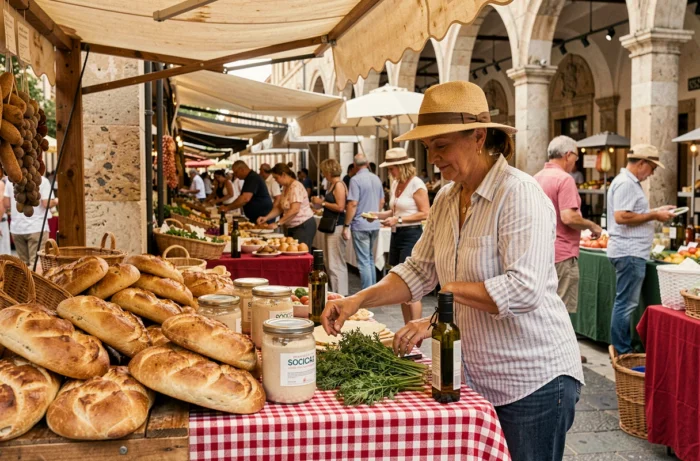
This culinary identity is not discovered in classic tourist guides. It lives in family kitchens, the markets of Condamine, and the rare restaurants that take the time to prepare these dishes according to traditional methods.
The heritage recognition carried by the association created in 2023 could change the game. If Monegasque cuisine obtains intangible heritage status, it will gain visibility without losing its family character. The challenge remains to document without freezing, to transmit without standardizing.