
A cluttered living room filled with personal furniture, walls with overly bold colors, and a dated kitchen: these are what hinder the sale of a property. Home staging involves neutralizing these visual obstacles so that buyers can envision themselves in the space. This expertise is attracting more and more people looking to change careers, and the Decoscope platform offers an online course that incorporates this specialty into a broader training program in interior design.
Interior Designer and Home Stager: Two Different Project Logics
Before choosing a training program, it is essential to understand what separates these two activities. An interior designer designs a space according to the tastes of the client who will live there. The home stager, on the other hand, depersonalizes a space to appeal to the largest number of potential buyers.
In practical terms, an interior designer might choose a bold wallpaper because their client loves the pattern. A home stager would remove that same wallpaper and repaint the wall in a neutral shade. The goal of home staging is to sell quickly, not to decorate for the long term. The budget for enhancement typically does not exceed a fraction of the property’s selling price.
Decoscope first trains students in the profession of interior designer, then addresses home staging as a complementary module and a professional outlet. Those who wish to learn home staging with Decoscope therefore follow a generalist path before specializing. This approach has an advantage: mastery of colors, volumes, and layouts serves both decoration and property enhancement.
Decoscope Program: What the Curriculum Truly Covers in Decoration and Home Staging
The complete curriculum lasts about ten to twelve months, with around ten hours of study per week. It is conducted entirely online, making it accessible to those who are employed or have family responsibilities.
Technical Skills Taught
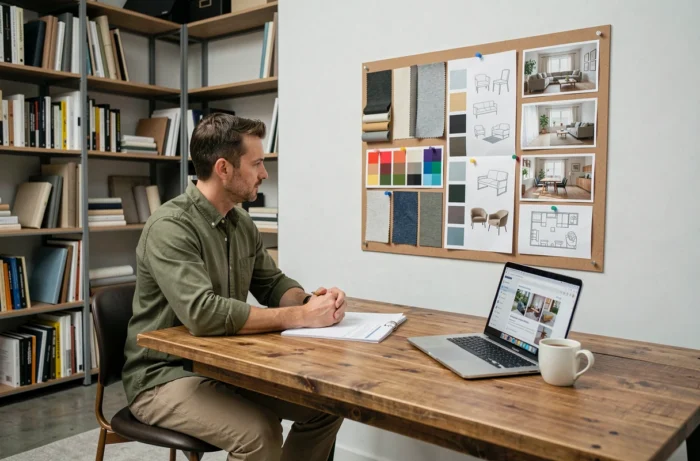
Have you ever tried to draw a layout plan freehand? The result rarely convinces a client. The training includes mastering software like SketchUp to produce 2D plans and 3D renderings. These tools allow a homeowner to see what their living room could look like after home staging, even before moving a piece of furniture.
- Colorimetry and Color Harmony: choosing the right combinations to visually enlarge a room or create a warm atmosphere
- Reading and creating space layout plans, from measuring to the final rendering
- Building a professional portfolio with projects completed during the training, usable for approaching clients
- Managing a client project from start to finish: initial contact, diagnosis, proposal, and follow-up on the decoration project
The Home Staging Module in the Curriculum
Home staging is not the entry point of the curriculum. It comes after the basics of decoration. This positioning means that Decoscope does not provide a standalone home staging training, but integrates this skill into a broader set. For someone who wants to work solely in property enhancement, this is a point to consider.
In return, the program offers real versatility. An interior designer trained in home staging can offer both services to their clients, which expands their market.
Price, Financing, and Certification: Practical Questions Before Enrolling
The complete training starts at 2,300 euros, with the possibility of installment payments. Specialized modules alone are offered at lower rates.
One point deserves attention: the Decoscope training is not eligible for CPF. It also does not prepare for the RS7124 certification, which is the sector reference in home staging registered in the Specific Directory of France Compétences. If you are aiming for public funding or a title recognized by France Compétences, specialized organizations like Quesacoach offer certifying paths dedicated to home staging.
Furthermore, since decree n° 2026-728, applicable from November 1, 2026, online training organizations must prove the effectiveness of remote monitoring. Simple logins to a platform are no longer sufficient: validated quizzes, submitted exercises, and attendance records in video calls are now required. This tightening directly affects any training that seeks public or parapublic funding.
Working as a Decorator or Home Stager: Status and Reality of the Profession
The profession of interior designer is not regulated in France. No state diploma is required to practice, unlike the profession of interior architect, which requires five years of study. The confusion between the two is common and can lead to disappointments.
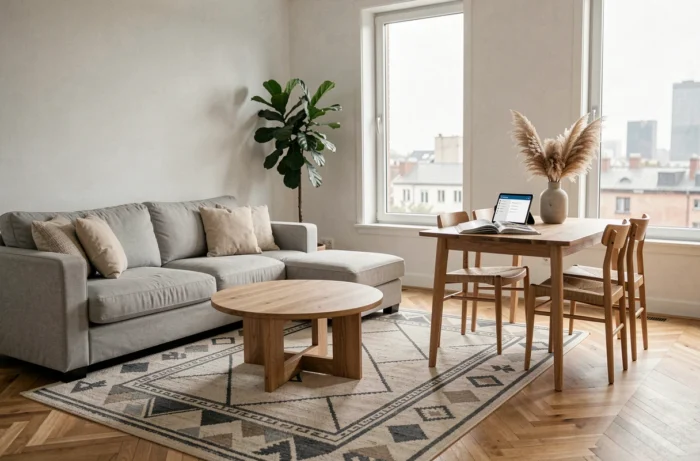
In practice, most decorators trained online start as micro-entrepreneurs. The home stager often works in partnership with real estate agencies, which entrust them with the enhancement of properties before they are put up for sale. Building a network of local partners is as important as the training itself.
Why is this detail crucial? Because a diploma or certificate does not generate clients. The portfolio built during the course, the ability to show convincing before/after transformations, and the quality of the professional network determine the viability of the activity. Decoscope includes personalized mentoring with feedback on projects, which helps produce credible work before launching.
The renovation and real estate transaction market offers opportunities, but competition exists. A home stager who also masters complete decoration, 3D modeling, and space planning advice is better positioned than someone focused solely on decluttering and white paint. This is the main argument for a generalist curriculum like that of Decoscope, provided one accepts that home staging remains a module among others, not the core of the program.