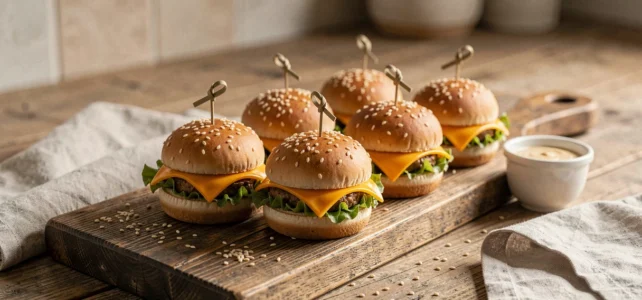
Preparing mini appetizer burgers the day before is possible, but not just any way. The classic trap is to assemble the complete burgers before storing them in the refrigerator. The result the next day: a soggy bun, wilted lettuce, and hardened cheese that nobody wants. The right method relies on a simple logic, that of fractional preparation: each element is prepared and stored separately, then assembled a few hours before the guests arrive.
Preparation the day before without assembly: the rule that changes everything
Have you ever noticed that a sandwich prepared too early becomes soggy? The bread absorbs moisture from the filling. For a mini burger, the phenomenon is even faster due to the small size: the crumb is fine, and the surface area in contact is proportionally larger.
Recommended read : Discover the best beauty tips to enhance your daily routine
The day before, prepare and store the buns, meat, sauce, and raw toppings separately. Each component goes into its own airtight container in the refrigerator. By doing this, you can find a recipe for cold mini burgers on Gourmandises et Cie that details this fractional storage method precisely.
Assembly is done only one to two hours before serving. This time is enough for the burgers to return to room temperature without the bread having time to soften. If you are serving outdoors in hot weather, shorten this time.
You may also like : Everything You Need to Know About the Westie: Temperament, Breeding Tips, and Tricks for Your Companion
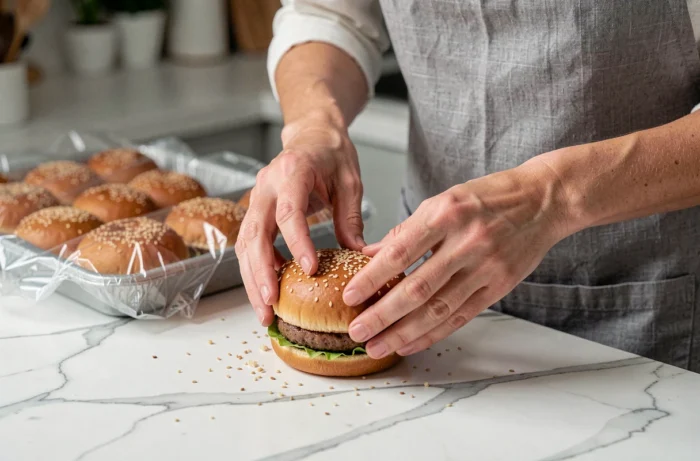
Cooked patties the day before: storage and reheating
Cooked ground meat is the most sensitive element in terms of hygiene. After cooking, let the mini patties cool quickly, then place them in a dated airtight container. Store between 0 and 4 °C, maximum 24 hours.
The next day, avoid the microwave. It makes the meat rubbery, especially for such small portions. A quick pass in a hot skillet, a few seconds on each side, restores crispness on the surface while keeping the juice inside.
Why this precaution? A mini patty of a few centimeters loses its moisture very quickly if reheated too much. The hot skillet allows for a quick Maillard reaction (that’s the golden crust that forms when exposed to heat) without drying out the meat’s center.
Homemade mini burger buns: keeping them soft until serving
Homemade buns make all the difference compared to industrial versions. The classic dough combines flour, whole milk, baker’s yeast, soft butter, and a touch of sugar. After shaping into small balls and baking, proper storage is essential.
- Once cooled, wrap the buns in a clean cloth, then in a partially open freezer bag to allow the crumb to breathe without drying out.
- Do not place them in the refrigerator: the cold speeds up the staling of the bread (starch recrystallizes faster between 0 and 4 °C than at room temperature).
- Store them at room temperature in a dry place. They will remain soft for 24 hours without any problem.
- Just before assembly, pass each bun cut in half under the oven grill for a few seconds. This light toasting creates a barrier that prevents the sauce from soaking into the crumb.
A toasted bun absorbs much less sauce than a plain bun. This step takes two minutes and transforms the final result.
Toppings and sauces for cold or warm mini burgers
The choice of toppings depends on what you aim for: a mini burger served cold, warm, or reheated. Each option requires different toppings.
Cold mini burger: toppings that hold without reheating
For a cold service, opt for toppings that do not change texture in the refrigerator. Cheddar remains soft even when cold, unlike a raclette cheese that hardens and becomes waxy. Cheddar and Comté are the most suitable cheeses for cold mini burgers.
On the sauce side, homemade mayonnaise or pesto keeps well. Avoid very liquid sauces (ketchup, diluted barbecue sauce) that soak the bread within a few hours, even in an unassembled burger.
Warm mini burger: quick assembly on the day
If you reheat the patties in the skillet, take advantage of the residual heat to place the cheese directly on the meat. It melts in a few seconds. Add lettuce, onions, and sauce during assembly, never beforehand.
Some combinations that work well together:
- Beef, melted cheddar, caramelized onions (prepared the day before, they reheat very well), crunchy lettuce
- Lemon-marinated chicken, fresh goat cheese, pesto, arugula
- Smoked salmon, herb cream cheese, a few capers, without reheating

Quantities and organization for a successful appetizer
Count two to three mini burgers per person for a classic appetizer, more if it’s a dinner-style appetizer. Plan for at least two different toppings to satisfy varied tastes and dietary restrictions.
Organization the day before boils down to three tasks: cooking the patties, preparing the buns (or buying them), and packaging each topping separately. On the day itself, you will just need to toast the buns, quickly reheat the meat, and assemble. By working this way, you spend less than thirty minutes in the kitchen on the day of the event.
One last often-overlooked point: take the components out of the refrigerator in the order of assembly. The buns first (they toast while the meat reheats), then the meat, and finally the cold toppings. This sequencing prevents the salad or fresh cheese from sitting out at room temperature for too long while serving mini burgers at the right temperature.