
Chips occupy a permanent place on the snack shelves of French supermarkets. However, their nutritional composition varies considerably from one brand to another, and the labels’ mentions of “healthy” or “vegetables” guarantee nothing. Identifying chips that are truly healthier requires looking beyond marketing and cross-referencing several indicators that labels do not always highlight.
Chips and ultra-processed foods: a now quantified cardiovascular link
Most comparisons stop at the Nutri-Score or salt content. A modeling study published in 2024 in the American Journal of Preventive Medicine broadens the scope. It estimates that between 23% and 38% of cardiovascular events in the Canadian population in 2019 could be attributed to a high consumption of ultra-processed foods, a category that includes industrial chips.
Read also : How to Choose a Short Wedding Dress for a Chic and Trendy Look
The study specifies that a reduction of 20% to 50% in these foods could have prevented, depending on the scenarios, 16,800 to 45,900 cases of heart disease and 3,100 to 8,300 deaths related to cardiovascular diseases. These figures shift the question of chip choice: the frequency of consumption weighs as much, if not more, than the chosen brand.
In practical terms, choosing the best healthy chips is not just about comparing two bags on the shelf. It is also necessary to consider the role this product plays in daily nutrition.
Read also : Discover the best beauty tips to enhance your daily routine
Salt, saturated fats, and additives: three label reading criteria that really matter
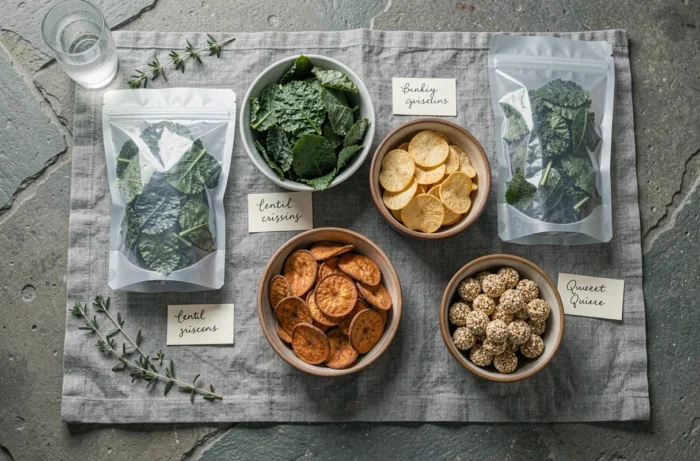
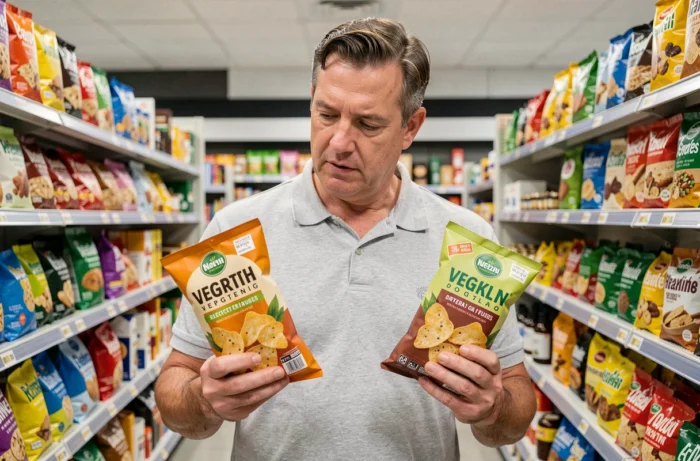
Salt remains the most discriminating marker among chip brands. According to data reported by 60 Millions de consommateurs and the Fédération romande des consommateurs, a classic plain potato chip contains about 1.2 g of salt per 100 g. Some alternative chips made from legumes or rice can go up to 3.1 g per 100 g, nearly three times more.
Saturated fats are the second criterion to check. Reduced-fat potato chips show lower levels compared to classic versions, but this reduction is sometimes accompanied by the addition of additives to compensate for texture or taste. The trade-off between fats and additives is not straightforward.
Here are the points to check on the label before buying:
- The salt content per 100 g: below 1.2 g, the chip is in the lower market average. Above 2 g, the content is high regardless of the type of chip.
- The ingredient list: the shorter the list, the less processed the product. Three to five ingredients are sufficient for a plain potato chip (potatoes, oil, salt).
- The type of oil used: sunflower or olive oil generates less saturated fat than palm oil, which is still present in some brands.
- The Nutri-Score: a B is the best score observed in the chip market. The majority fall between C and D.
Vegetable and legume chips: promises to be taken with caution
Chips made from lentils, chickpeas, or dehydrated vegetables occupy an increasing share of the shelves. Their “health” image relies on the mental association with fresh vegetables, but the nutritional reality is more nuanced.
Some legume chips contain more salt than classic chips. A test by the Swiss FRC highlighted brands exceeding 3 g of salt per 100 g, while the plain potato chip is around 1.2 g. The manufacturing process (frying, extrusion) and added flavors partly explain this discrepancy.
Vegetable chips (beetroot, sweet potato, parsnip) present a different problem. The fiber and vitamin content of the original vegetable drops significantly after frying. What remains in the bag is mostly starch, oil, and salt, in proportions comparable to a potato chip. The packaging suggests a nutritional benefit that the finished product does not deliver.
A chickpea chip can be an acceptable choice if its ingredient list remains short and its salt content moderate. However, assuming it is healthy just because it contains a legume is to confuse the raw ingredient with the processed product.
Acrylamide in chips: the invisible criterion of comparisons
Acrylamide is a substance that forms naturally when cooking starchy foods at high temperatures. Chips, fried at over 120 °C, systematically contain it. The European Food Safety Authority (EFSA) has classified this substance as a health concern due to its potential genotoxicity.
No Nutri-Score or nutritional table mentions the acrylamide content. This criterion is, however, one of the most relevant for assessing the long-term health impact of a chip. Chips cooked at low temperatures or baked generally contain less than those from traditional frying, but manufacturers rarely communicate on this point.
The available data do not allow for precise comparisons of brands on this criterion, due to the lack of published systematic measurements. This is a real limitation of current comparisons, including those from 60 Millions de consommateurs.
Frequency and portion: what weighs more than the chosen brand
The data from the modeling published in the American Journal of Preventive Medicine points to a conclusion that brand comparisons do not articulate: reducing the frequency of consumption has more impact than choosing a slightly less salty brand. The difference between a chip with 1.0 g of salt and another with 1.2 g becomes marginal if consumption is daily.
The package format also plays a practical role. Individual formats (about 30 g) mechanically limit the portion. Larger shared formats encourage consumption that often exceeds the portion indicated on the packaging.
- Prefer individual formats over family packs to control the portion actually consumed
- Reserve chips for occasions rather than daily consumption, regardless of the displayed Nutri-Score
- Pair chips with other foods during snacks (raw vegetables, hummus) to reduce the amount of chips ingested per serving
The choice of chips for health on a daily basis relies less on the brand than on the careful reading of three lines of the label (salt, ingredient list, type of oil) and on the frequency with which the bag is opened. Legume or vegetable chips do not deserve their health halo without verification, and acrylamide remains a blind spot that the Nutri-Score does not cover.