We’ve all experienced that moment in a store or in front of an e-shop: spotting a piece that’s right on trend, adding it to the cart, then realizing it clashes with everything else in the wardrobe. This season’s fashion trends (polka dots, lace, ballet flats, structured bags) are appealing on the runway, but wearing them daily without looking like a walking lookbook requires some concrete adjustments.
Balancing polka dots and lace in everyday outfits
The instinct when spotting two strong trends is to stack them. Polka dot blouse, lace skirt, patent ballet flats: on paper, each piece is in vogue. On oneself, the result resembles a costume.
The most reliable ground rule: one trendy piece per outfit, the rest in neutral basics. A polka dot top works better with straight raw jeans and loafers than with a lace skirt and flashy accessories.
For lace, opt for discreet inserts (collar, cuffs, back of a blouse) rather than a dress entirely made of lace, which quickly veers into ceremonial territory. Feedback varies on this point depending on body shape and chosen color, but a panel of lace on a matte fabric creates a more wearable contrast than a total transparent look.
Regular checks on carofashionews.com allow you to see how these patterns are actually worn in street style, far from the editorialized silhouettes of runway shows.
Trendy ballet flats: pairing them without looking too prim
Ballet flats are making a strong comeback this season. The classic trap is to wear them like in 2010: with skinny jeans and a short cardigan. The result looks dated in seconds.
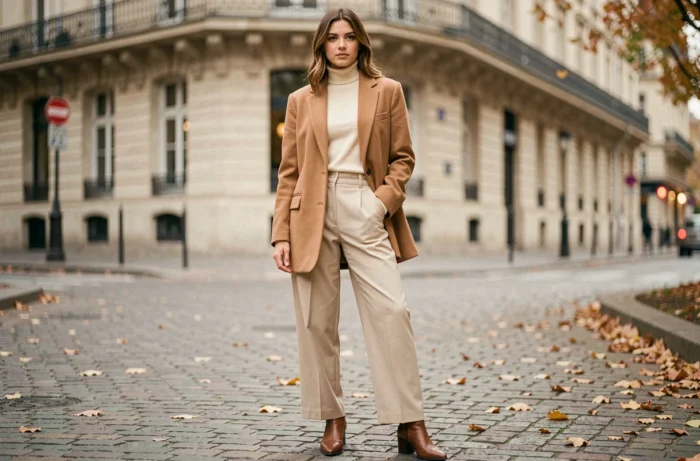
Pairing ballet flats with loose volumes completely changes their effect. Structured wide trousers, a fluid midi skirt, or even high-waisted bermuda shorts give ballet flats a contemporary anchor. The contrast between the delicacy of the shoe and the fullness of the garment creates a visual balance that skinny jeans do not provide.
Materials and colors to favor
Patent leather or satin ballet flats draw the eye down the silhouette. If the rest of the outfit is already busy (prints, bright colors), opt for a matte ballet flat in a neutral tone. Conversely, a sober monochrome outfit can easily support a burgundy velvet or black patent ballet flat.
- Beige wide trousers + black patent ballet flat + solid top: sharp silhouette, no overload
- Pleated midi skirt + flat suede ballet flat + short jacket: the volume below compensates for the simplicity of the shoe
- Raw straight jeans with rolled hems + colorful ballet flat + white shirt: the pop of color stays at the feet, not everywhere
Structured bags: choosing the right size for actual use
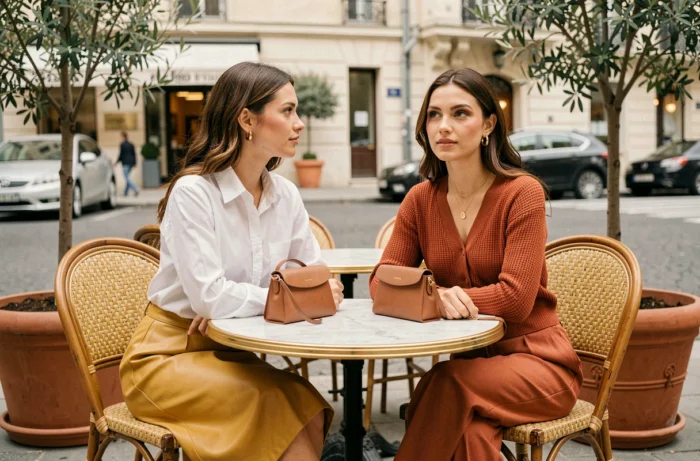
The structured bag (geometric lines, rigid leather, sharp closure) dominates collections this season. It’s seen everywhere in mini format, but this size poses an obvious practical problem: it holds nothing.
Before splurging, list what you actually carry every day. Phone, keys, wallet, earbuds, a lip balm: that’s already enough to fill a mini bag. A medium-sized structured bag remains the best compromise between style and function.
Rigid bag and fluid outfit, the duo that works
A bag with clean lines anchors a fluid silhouette. Flowing long dress, wide linen trousers, oversized blouse: the structured bag adds the geometry that’s missing. Conversely, worn with a fitted blazer and cigarette pants, it stiffens the silhouette to the point of freezing it.
Also consider the shoulder strap. Short shoulder models visually raise the waistline. Long shoulder models elongate the silhouette but can overwhelm smaller frames. Testing the shoulder strap length in front of a full-length mirror avoids unpleasant surprises.
Seasonal colors and sustainable pieces: a decision to make now
This season’s palettes revolve around intense tones (deep red, cobalt blue, olive green) and warm neutrals (butter beige, off-white). The urge to buy a bright red pair of pants is strong, but its lifespan in a wardrobe rarely exceeds two seasons.
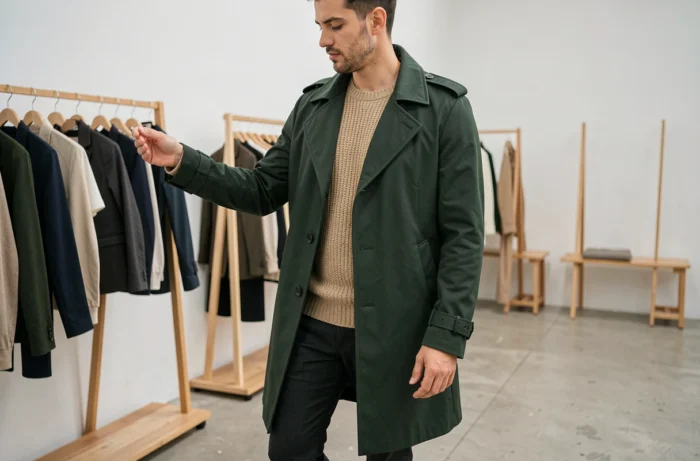
The most cost-effective approach is to concentrate trendy colors on accessories and small pieces (scarf, belt, bag, shoes) rather than on key items. A butter beige coat can last through several seasons. A cobalt red pair of pants, rarely.
The European regulation also changes the game
Since July 2026, large fashion companies in Europe are no longer allowed to destroy their unsold textiles. They must prioritize resale, donation, or repair. This ban covers clothing, shoes, hats, and even household linens.
In practical terms, this means more pieces from previous seasons will be available in second-hand circuits or clearance sales. For those looking for current trends at reduced prices, resale and clearance circuits are becoming a reliable source of recent pieces.
- Eco-contributions on textiles will be adjusted based on durability, reparability, and fiber composition, which could steer brands towards more resilient materials
- Medium-sized companies will be subject to the ban on destroying unsold items starting in 2030
- The scope also includes textile accessories (hats, curtains, blankets), not just clothing
Adopting this season’s fashion trends without falling into excess is based on a simple principle: each strong piece needs calm around it. A polka dot print stands on its own, a ballet flat gains modernity with ample volume, a structured bag anchors a fluid silhouette. The rest of the wardrobe does the work quietly.